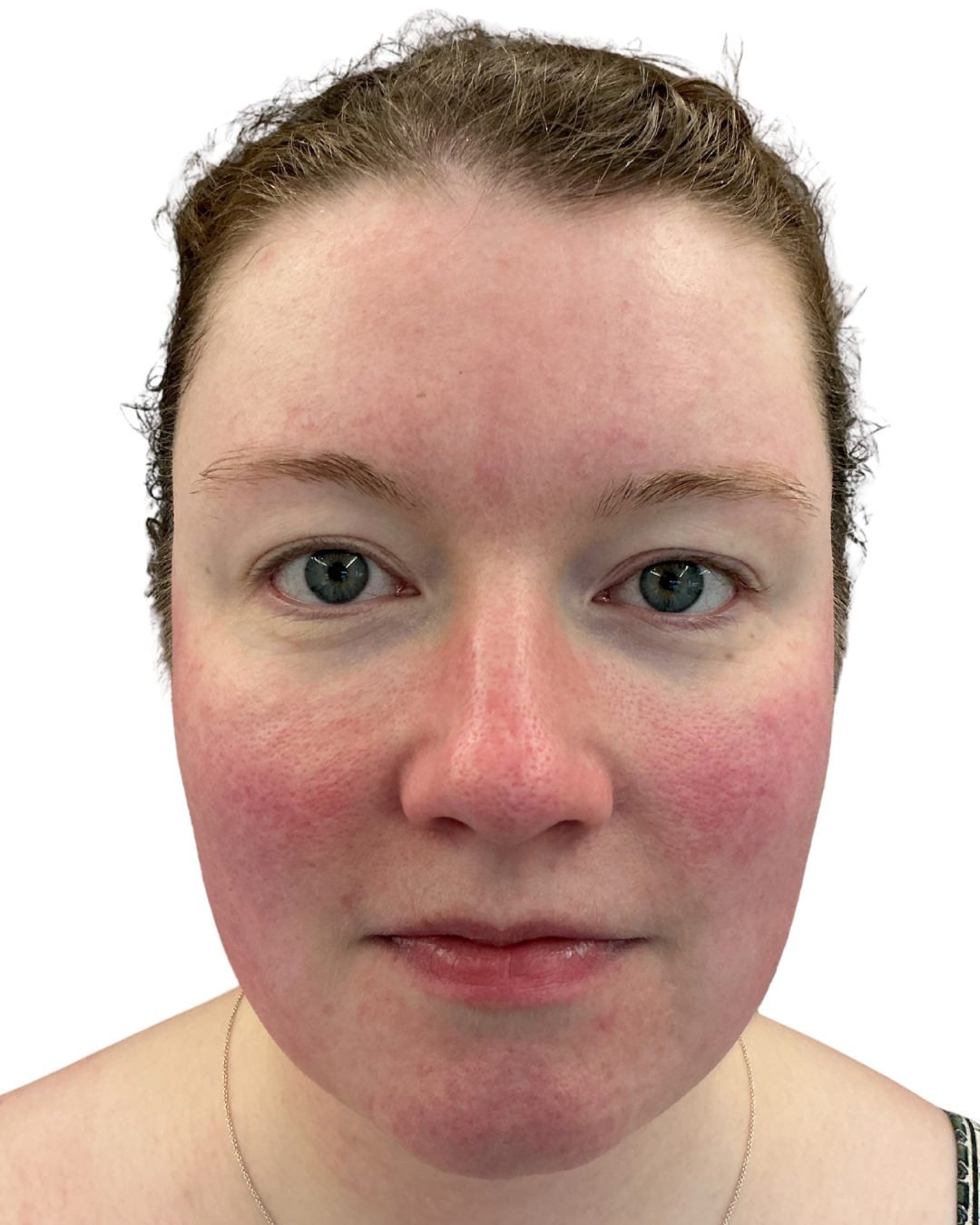
If you have rosacea, winter can be particularly difficult for your skin. Cold weather, biting wind, central heating and repeated changes in temperature can all make facial redness and sensitivity more noticeable.
At JB Aesthetics, we often see patients during the colder months who find their skin becomes less predictable. Some experience temporary flushing when moving from the cold into a warm room, while others notice persistent background redness or visible vessels around the nose and cheeks.
Understanding what is causing the redness matters. Reactive skin, persistent rosacea and established facial vessels do not necessarily need the same approach.
Why Does Rosacea Get Worse in Winter?
Rosacea is a chronic inflammatory skin condition that commonly affects the cheeks, nose, chin and forehead. It can cause flushing, persistent redness, sensitivity, visible blood vessels and, in some cases, acne-like bumps.
Winter can bring several triggers together. Cold temperatures and wind can irritate exposed skin, while moving quickly from a cold London street into a heated building can trigger flushing. Indoor heating may also leave the skin feeling dry, tight and more reactive.
A typical winter day can mean cold air during the morning commute, a warm Tube journey, central heating at work and a hot shower at home. For rosacea-prone skin, those repeated temperature changes can be enough to make redness noticeably worse.
Is Winter Facial Redness Always Rosacea?
No. Skin can look red because it is dry, irritated or sensitised by skincare. Visible thread veins can also create redness, while exercise, alcohol and sudden temperature changes can cause temporary flushing.
Rosacea tends to follow a more persistent or recurring pattern. You may notice repeated flushing across the cheeks and nose, sensitivity, background redness or small visible vessels that gradually become more noticeable.
This is why assessment is important before deciding on treatment. At our Marylebone clinic, advanced skin analysis using the OBSERV 520X allows us to look more closely at redness alongside pigmentation, dehydration and wider skin health. Rather than simply asking how red the skin appears, we can consider what may be contributing to it and how reactive the skin is before recommending a plan.
This personalised approach is particularly useful because redness can exist alongside other concerns such as pigmentation, sensitivity or changes in skin texture, which may alter what we prioritise first.
Can Medical-Grade Skincare Help Rosacea-Prone Skin?
Skincare can play an important supporting role, particularly when the skin feels dry, sensitive or easily irritated.
For milder redness, we would usually start by looking at the skin barrier and the products being used at home. Rosacea-prone skin often responds better to a deliberately simple routine, including gentle cleansing, appropriate moisturisation and daily broad-spectrum SPF. If the skin is already irritated, introducing several strong active ingredients at once can make sensitivity worse.
JB Aesthetics uses Obagi Medical skincare within personalised skin programmes. This does not mean every patient with rosacea needs the same routine. Product selection needs to reflect how reactive the skin is, what else is being treated and what it can realistically tolerate.
If someone arrives with dry, uncomfortable skin that is flushing frequently, we may simplify their routine before considering light or laser treatment. This reflects our wider skin-first approach to improving skin health and resilience, rather than trying to treat every visible concern at once.
What Treatment Can Help Persistent Rosacea Redness?
When redness remains visible even when you are not actively flushing, skincare alone may not be enough.
Persistent background redness and visible facial vessels are vascular concerns. Once a blood vessel remains visibly dilated, moisturisers and skincare cannot simply make it disappear.
This is where BBL® HEROic™ may be considered.
BBL stands for BroadBand Light. It uses controlled light energy to target unwanted colour within the skin. When treating vascular redness, the light is absorbed by haemoglobin within the blood vessels, allowing us to target visible red colour while limiting unnecessary treatment of the surrounding skin.
BBL HEROic may be considered for:
- Persistent facial redness
- Redness associated with rosacea
- Visible facial vessels and thread veins
- Uneven skin tone where redness is a significant component
- Redness alongside pigmentation, where appropriate
Treatment is tailored to what we can actually see. A patient with a few visible vessels around the nose may require a different approach from somebody with diffuse redness across both cheeks.
How Many BBL Treatments Are Needed for Rosacea?
This depends on the severity and pattern of the redness.
A course may be recommended for more established vascular concerns rather than expecting one treatment to remove everything. Improvement generally develops progressively, and maintenance may sometimes be appropriate.
It is also important to distinguish managing visible rosacea from curing rosacea. BBL HEROic can help reduce visible redness and vascular changes in suitable patients, but it does not remove the underlying tendency to flush or guarantee that new vessels will never develop.
This is why we often think in terms of longer-term skin management. As with pigmentation and accumulated sun damage, treating what is already visible is only one part of the plan. Protecting and supporting the skin afterwards matters too.
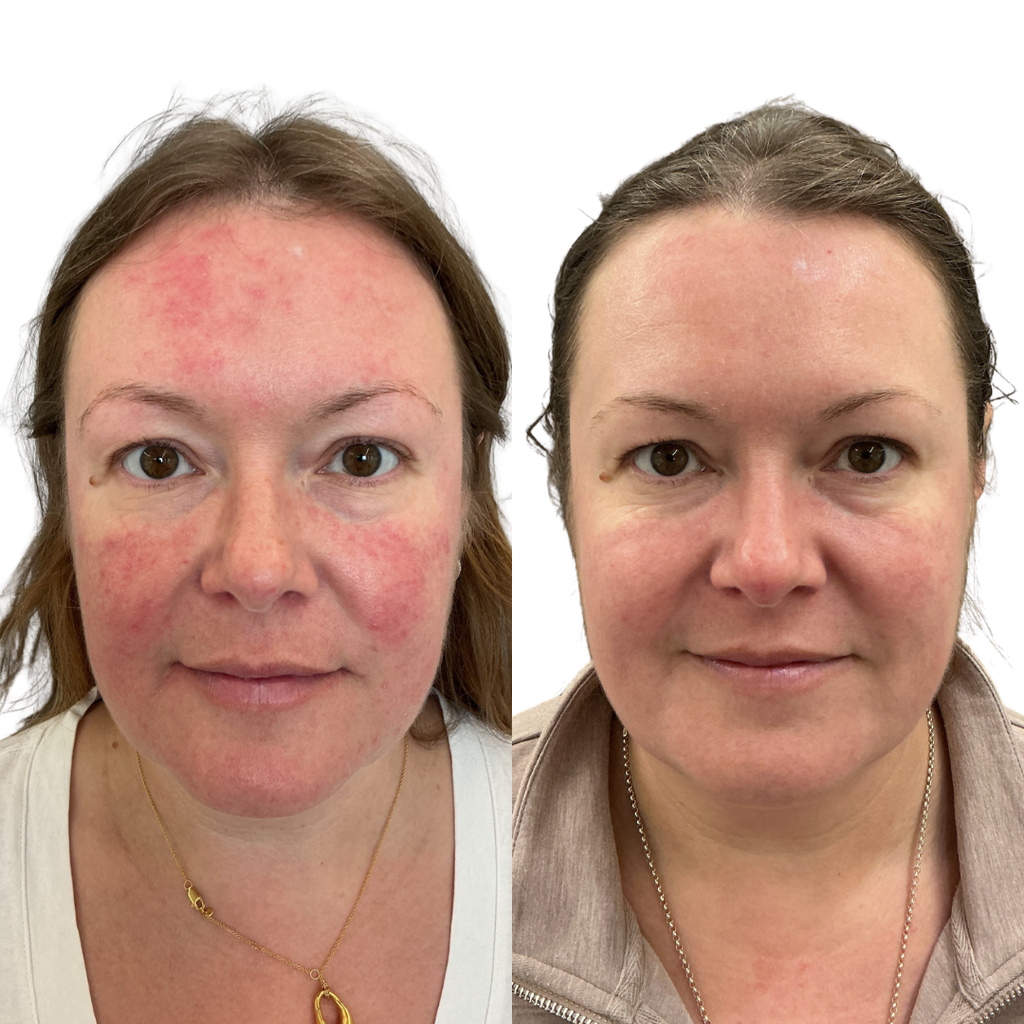
Before and After BBL treatment for rosacea at JB Aesthetics
See How BBL HEROic Can Improve Facial Redness
Watch this video to see how BBL HEROic has helped reduce persistent facial redness in one of our patients at JB Aesthetics. It shows the visible improvement achieved with treatment and gives you a better idea of the results that may be possible for rosacea-related redness.
Every patient’s skin responds differently, so results will vary depending on the severity of redness and individual skin characteristics.
Can BBL HEROic and MOXI Be Combined?
Yes, when there is a reason to treat more than redness.
MOXI® is a gentle, non-ablative fractional laser used to improve pigmentation, uneven texture, early sun damage and overall skin quality. It is not our primary treatment for vascular rosacea.
However, patients rarely present with one isolated concern. Someone may have persistent cheek redness alongside sun damage, pigmentation or uneven texture. This becomes increasingly common as different aspects of skin tone, texture and quality change with age.
In these cases, BBL HEROic and MOXI may be incorporated into the same wider treatment plan. BBL focuses more directly on unwanted red and brown colour, while MOXI addresses texture, tone and broader skin quality.
We would not combine treatments simply for the sake of doing more. If redness is dominant or the skin is particularly reactive, treating the vascular component first may be more appropriate. MOXI can then be introduced if there is a separate concern that genuinely warrants it.
Can You Treat Rosacea During a Flare-Up?
There is an important difference between having rosacea and treating skin that is acutely irritated, inflamed or unusually reactive.
If your skin is hot, sore or significantly more sensitive than normal, we may recommend settling it before progressing with elective light or laser treatment. Trying to correct everything while the skin is particularly reactive can be counterproductive.
Once the skin is more stable, persistent background redness and visible vessels can be assessed properly. This is also why our approach to professional skin treatments is based on the condition of the skin at the time, rather than automatically following the same protocol for every patient.
What Is the Best Treatment Plan for Winter Rosacea?
There is no single plan that suits every patient.
For mild, reactive redness without significant visible vessels, we may begin with skincare and barrier support. If persistent redness or thread veins are the main concern, BBL HEROic becomes more relevant. Where there is also pigmentation, sun damage or textural change, MOXI may be considered as part of a carefully planned combination approach.
The key is treating what is actually present rather than choosing a treatment based on the word “rosacea” alone.
This is particularly relevant for men, where factors such as thicker, oilier skin, shaving and individual skincare habits may also influence treatment planning. A similarly personalised approach is important when managing redness, rosacea and wider skin concerns in male skin.
Ultimately, improving redness can form part of a wider focus on skin quality and long-term skin health, but the treatment plan should remain proportionate to what is actually bothering you.
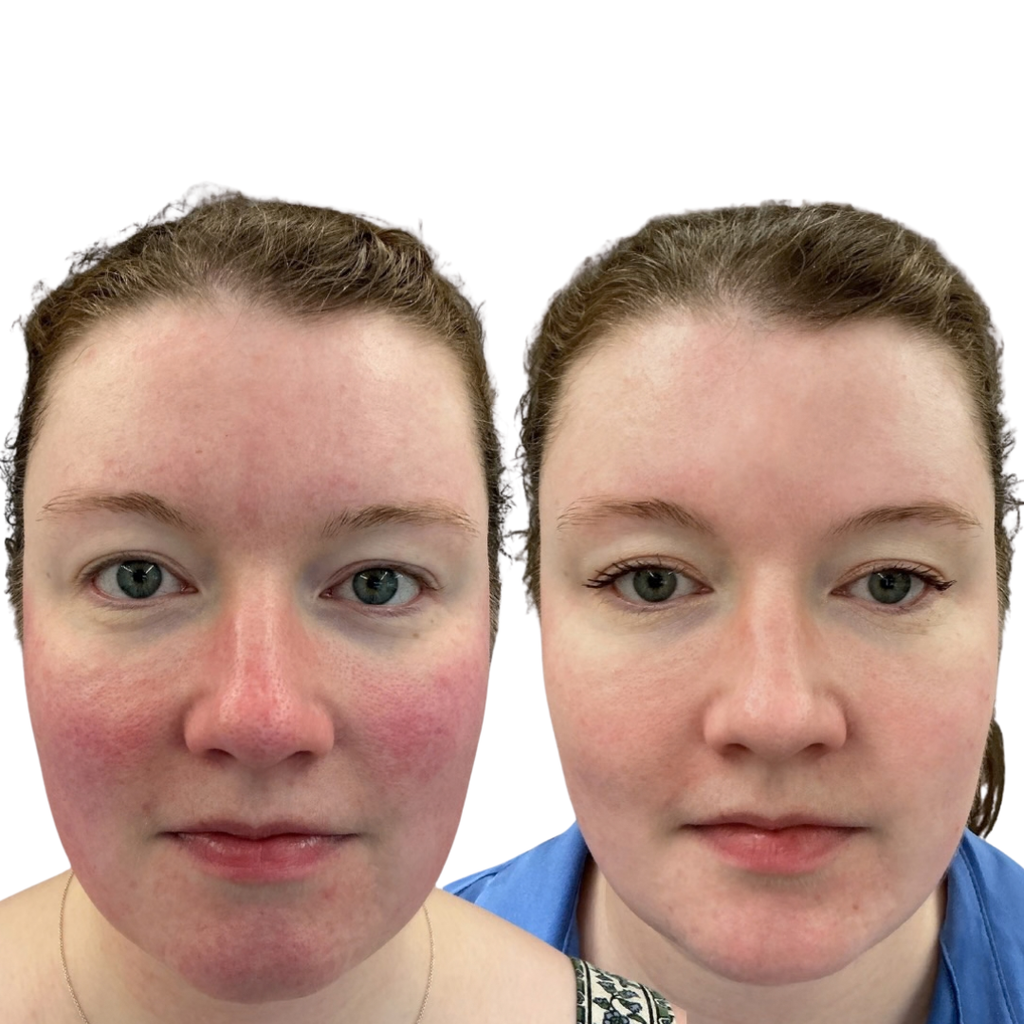
Before and After Rosacea Treatment with BBL at JB Aesthetics
Frequently Asked Questions About Rosacea in Winter
Can central heating make rosacea worse?
It can. Warm, dry environments may contribute to both flushing and skin dryness. If you notice a clear pattern, avoiding excessively hot rooms and direct heat sources may help.
Should I still wear SPF in winter if I have rosacea?
Yes. UV exposure does not disappear during winter, and sun exposure can trigger rosacea in some people. Daily broad-spectrum SPF is also important when professional skin treatments form part of your plan.
Why does my face turn red when I come inside from the cold?
Rapid temperature changes affect the blood vessels within the skin. With rosacea, this vascular response can be more pronounced, causing noticeable flushing when moving from cold air into a warm environment.
Can rosacea affect the eyes?
Yes. Ocular rosacea can cause dry, irritated, watery or gritty-feeling eyes. Persistent eye symptoms should be medically assessed rather than treated solely as a cosmetic skin concern.
Will BBL HEROic permanently cure rosacea?
No. Rosacea is a chronic condition. BBL HEROic may improve visible redness and vascular concerns in suitable patients, but future flushing or new vessels can still occur.
Managing Rosacea in Marylebone, London
Winter rosacea is not always simply a case of needing a stronger treatment. Sometimes the priority is calming reactive skin and supporting the barrier. In other cases, persistent redness or visible vessels mean that a targeted treatment such as BBL HEROic may be more appropriate.
At JB Aesthetics in Marylebone, Central London, we can assess the pattern of your redness and determine whether skincare support, BBL HEROic or a wider skin plan incorporating MOXI is appropriate.
If your redness becomes noticeably worse every winter, or you are unsure whether you are seeing temporary flushing, rosacea or visible facial vessels, book a consultation with our team in Marylebone. We welcome patients from across Central London and surrounding areas, including Mayfair, Fitzrovia, Paddington and St John’s Wood.